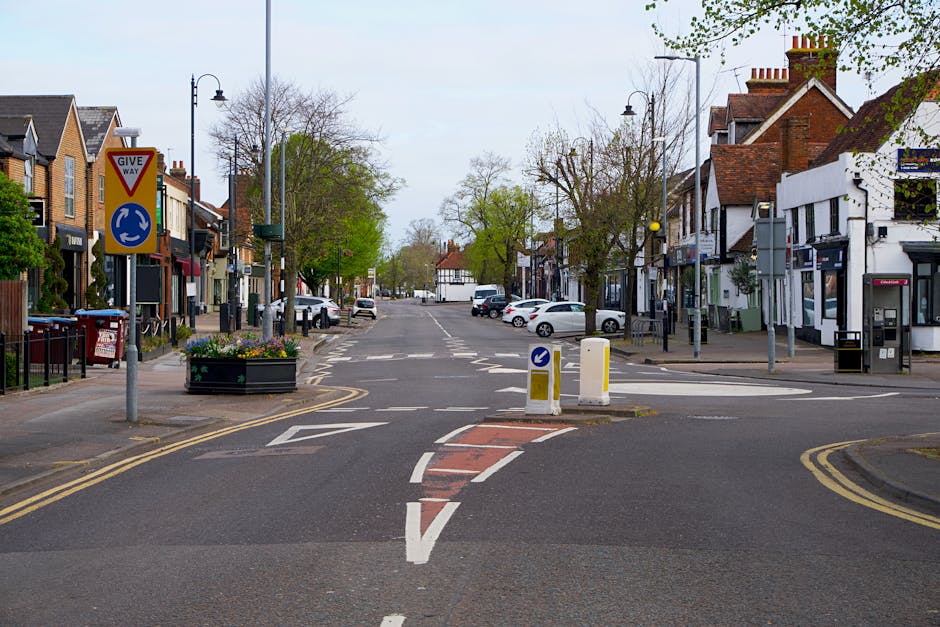

Havering council permits for Hornchurch street removals explained
Posted on 01/08/2026
Moving house or office in Hornchurch sounds simple until the van arrives and the road tells a different story. A tight cul-de-sac, busy high street, yellow lines, resident bays, a school run, a loading restriction, or just a grumpy neighbour who really loves their pavement space can turn a straightforward move into a stressful one. That is where Havering council permits for Hornchurch street removals explained becomes more than a search phrase. It is the difference between a calm moving day and a last-minute scramble.
In this guide, we break down what a permit is, when you may need one, how it fits into a street removal in Hornchurch, and how to plan around the usual headaches. If you are moving from a flat, a family home, student accommodation, or an office, this will help you make better decisions and avoid awkward surprises. Let's face it, nobody wants to spend moving day arguing with a traffic warden while the sofa is halfway out the door.
If you want broader moving support while you plan, you may also find our services overview useful, especially if your move involves more than just a quick lift-and-load.
Why Havering council permits for Hornchurch street removals explained matters
Street removals are rarely just about transport. They are about access, timing, loading space, road rules, and keeping the move efficient enough that everything stays on schedule. In Hornchurch, that can matter even more because local streets vary a lot. Some areas are roomy enough for a removal van to pause without drama; others are tighter, busier, or heavily managed. A permit can be the practical answer when your van needs to stop in a restricted place or when a planned loading area is not automatically available.
The key point is simple: if the vehicle cannot legally or safely stop where it needs to, the move starts to absorb risk. You may lose time carrying furniture further than expected. You may have to split the load. You may need to park somewhere less convenient and walk items back and forth. That adds effort, and in some cases cost. Worse still, a misjudged stop can lead to enforcement action or complaints from residents who are already having a tough morning themselves.
There is also the human side. A good street move is one where your belongings come out in a controlled flow, not in a rush. If you have a wardrobe, white goods, boxes, and fragile items to move, every extra minute of faffing around at the kerb can make things harder. If you are moving from a flat, you may already be dealing with stairs, shared entrances, and tight hallway turns. The permit question is often what keeps the rest of the move steady.
For people planning a flat move, our flat removals Hornchurch page can give you a feel for the access issues that often trigger permit questions in the first place.
Expert summary: A permit is not just a piece of paper. In moving terms, it is often a way to protect time, avoid parking trouble, and keep the loading process predictable.
How Havering council permits for Hornchurch street removals explained works
In plain English, a permit is permission to use a road space or parking arrangement in a way that would otherwise be restricted. The exact arrangement can vary depending on the road, the bay, the road markings, the size of the vehicle, and how long loading or unloading takes. For street removals, the practical question is whether the van can stop where it needs to without breaching local parking rules.
There are a few typical scenarios. You might be moving from a road with resident permit bays, a controlled parking zone, yellow lines, or a time-limited loading area. You might only need to stop for a short period to load heavier items. Or you may need space reserved long enough for the whole move to happen properly. In some cases, the issue is not the van alone but the combination of van size, street width, and local traffic flow. That is where planning matters.
It is also worth separating a few ideas that people often mix together:
- Loading means stopping to move goods in or out.
- Parking means leaving the vehicle stationary beyond immediate loading.
- Suspensions or bay controls may affect who can use a space and when.
- Access planning is the wider moving strategy, including whether the van can get close enough to the property.
Not every move needs a permit, and not every street move is complicated. Truth be told, some Hornchurch moves are fairly neat. But once a road has restrictions, or once you are trying to move a lot in a short time, permit planning becomes part of sensible preparation.
If your move is time-sensitive, it can help to look at same day removals Hornchurch so you understand how last-minute access planning may affect your timeline.
Key benefits and practical advantages
So why bother organising this properly? Because the benefits are surprisingly practical.
- Less disruption: A planned stop reduces the chance of circling the block while someone tries to find a legal space.
- Better timing: If the van can load closer to the door, the whole day tends to run more smoothly.
- Lower stress: You are not constantly wondering whether the next knock on the window is a neighbour, a warden, or your mover asking where to park.
- Safer handling: Shorter carrying distances usually mean less chance of bumping furniture, dropping boxes, or tiring people out too early.
- More accurate quotes: Removal teams can estimate the job more honestly when access is properly understood.
There is another benefit people forget: goodwill. A tidy, well-managed move is less irritating to neighbours, especially in denser residential streets. Nobody wants a removal lorry blocking the whole road for an hour. If you keep the vehicle position sensible and the loading process efficient, you tend to get fewer complaints and less pressure. That matters more than people think.
Good access planning also supports better use of the right vehicle. A smaller van may be enough for some moves, while a larger vehicle could be needed for a house clearance or a full family move. If you are comparing vehicle types, our removal van Hornchurch page is a handy reference.
Who this is for and when it makes sense
Permit planning is not just for large house moves. It is useful for a wide range of situations, and in Hornchurch the local street layout can make even small jobs trickier than they first appear.
1. Flat movers
If you live in a block with limited on-street stopping space, a permit may be the cleanest way to keep the move moving. Shared entrances, stairwells, and tight parking around flats can become awkward very quickly, especially if the van cannot stop near the building.
2. House movers
Family homes often have more furniture, more boxes, and more loading time. If the property sits on a road with restrictions, a permit or managed loading plan becomes much more relevant. It is not glamorous, but it is the sort of detail that saves a lot of shouting on the day.
3. Office movers
Business moves need timing and access control. Staff, equipment, and fixtures usually require a more structured approach, and permit planning can help keep the road move efficient. If the office sits in a busier part of Hornchurch, this becomes even more important.
4. Students and short-term renters
Student moves are often lighter, but they are also often rushed. A move-out day can be surprisingly chaotic. If the road is tight, a permit helps prevent wasted time and missed handover slots. Our student removals Hornchurch service page may be useful if that is your situation.
5. Bulky item moves
Pianos, wardrobes, sofas, and other awkward items are the classic access problem items. They take longer to carry and often need the van to be parked very specifically. If this sounds familiar, take a look at bulky item removals in Hornchurch for a more focused discussion.
Step-by-step guidance
Here is the practical way to handle the permit side of a Hornchurch street removal without overcomplicating it.
- Check the street situation early. Look at your loading point, nearby bay types, any lines or restrictions, and how much space the van will need.
- Work out the actual access route. Think beyond the front door. Can the van stop close enough? Will there be stairs, tight corners, or long carries?
- Estimate the loading time honestly. A quick single-room move is one thing. A house with furniture, appliances, and fragile items is another.
- Decide whether a permit or managed parking is needed. If stopping is restricted, if the road is busy, or if the move is likely to take a while, this becomes worth sorting.
- Book the move with the access plan in mind. Do not leave the van booking until the last moment and then hope the street situation magically works itself out. It usually does not.
- Prepare the property for fast loading. Boxes ready, furniture dismantled where possible, hallways cleared, and keys available.
- Keep a small buffer in the schedule. A ten-minute delay can become a thirty-minute delay if parking becomes awkward. Funny how that happens.
If you are still at the planning stage, our packing and boxes Hornchurch page may help you get the property move-ready faster.
A simple rule: if the road access feels uncertain, treat it as a planning problem, not a day-of problem. That one decision saves a lot of stress.
Expert tips for better results
In our experience, the smoothest moves are rarely the ones with the fanciest plan. They are the ones where someone thought through the small things early. Here are the tips that tend to matter most.
- Measure the access, not just the room. A sofa may fit in the house but still be a nightmare from the van to the front door.
- Build the move around the heaviest item first. If the piano, wardrobe, or fridge is the problem item, plan the whole loading order around that.
- Avoid peak road pressure where possible. School run windows and commuter peaks can make Hornchurch streets feel a lot tighter than they are at quieter times.
- Have a backup loading spot in mind. If your first choice is blocked, you need a second option that still keeps the move legal and workable.
- Use the right vehicle size. Too small and you will be making extra trips. Too large and you can create access problems that were not there before.
One small, slightly annoying truth: the best time to solve a parking issue is never on moving morning with the kettle still warm and the boxes half sealed. It is the day before, or earlier. Ideally earlier.
If your move involves unusual access or tight entry points, our furniture removals Hornchurch page may give you a better sense of how specialist handling can help.
Common mistakes to avoid
A few errors show up again and again. They are easy to make, which is exactly why they are worth spelling out.
- Assuming every street is fine for stopping. This is the big one. A road that looks easy on foot may still be restrictive for a van.
- Leaving access checks too late. By the time you are packed, rearranging parking is much harder.
- Booking the wrong type of move. A small vehicle can be perfect for a student flat, but not for a larger family move with bulky furniture.
- Underestimating loading time. Even if the van is right outside, the move can slow down if the property is not ready.
- Forgetting how common delays are. Lift access, neighbours, weather, and road works can all nudge the timeline.
A related mistake is not telling the mover about awkward items. If you leave out the fact that you have a heavy wardrobe, a piano, or a very awkward sofa, nobody wins. The quote may look good, but the day turns messy. If that sounds familiar, our common booking mistakes article is worth a look.
And yes, hidden costs can show up when access is poor. If you want to understand how that happens, the guide on avoiding hidden costs in Hornchurch removals quotes is a smart companion piece.
Tools, resources and recommendations
You do not need a complicated toolkit for this. You need the right information, a sensible checklist, and a moving partner who understands street access in the real world.
- Property and access notes: Write down parking details, floor level, lift availability, and loading door location.
- Room-by-room inventory: This helps decide vehicle size and loading sequence.
- Box labelling: It sounds basic, but it saves time when the van is loaded and unloaded under pressure.
- Photo notes: A couple of photos of the front street, entrance, and awkward items can help the mover assess the job properly.
- A realistic moving quote: A quote should reflect the real access conditions, not just the nice version of them.
If you are comparing service levels, the broader removal services Hornchurch page can help you think through what kind of help you actually need. For smaller, simple jobs, a man and van Hornchurch arrangement may be enough. For bigger or more complex access, a more structured removal plan is often safer.
We also recommend checking your insurance and handling expectations before moving day. Our insurance and safety information is a sensible place to start if you want more peace of mind.
Law, compliance, standards, or best practice
Without turning this into a legal lecture, it is worth saying that road access, parking restrictions, loading rules, and vehicle use all sit within local and national transport expectations. In practical terms, that means you should not assume a van can just stop anywhere for however long it likes. Street restrictions exist for a reason: traffic flow, access for residents, safety, and local enforcement.
Best practice for removals is to treat access as part of the job specification. If the move needs stopping space, then stopping space is not a side issue. It is core to the job. That means clear communication between the customer and the moving team, honest timing, and care around any restrictions that apply to the street.
There is also a safety angle. Moving heavy items from a distant parking spot increases the chance of strain, trips, and damage. A well-planned permit or loading arrangement helps reduce that. In other words, compliance and practicality usually point in the same direction.
If you want to understand how a responsible removals provider frames these issues, take a look at health and safety policy and the wider about us page for context on how the business operates. For payment confidence, the payment and security page is also useful.
Options, methods, or comparison table
Here is a simple comparison of the usual approaches to Hornchurch street removals. It is not one-size-fits-all, but it does help you think clearly.
| Option | Best for | Strengths | Limitations |
|---|---|---|---|
| No permit, normal street parking | Quiet streets with easy access | Simple and low admin | Risky if restrictions apply or spaces are scarce |
| Short loading stop only | Quick, light moves | Efficient if the van can stop briefly and legally | Can be tight on time if packing is not finished |
| Permit or managed loading plan | Restricted roads or longer moves | More predictable access and less disruption | Needs early planning and may involve added cost |
| Smaller vehicle with flexible access | Flats, partial moves, student moves | Easier to place in tighter roads | May need more than one trip |
| Full-service removal approach | Large, complex, or high-value moves | Best control over timing, handling, and access | More coordination required |
For many Hornchurch moves, the sweet spot is not the biggest vehicle or the most formal setup. It is the one that fits the street, the property, and the amount of work. Simple as that, really.
Case study or real-world example
A typical Hornchurch example goes like this. A family is moving from a terraced house on a residential road with limited space. At first glance, they think the van can just pull up outside because the street looks quiet at mid-morning. But once the details are checked, there are resident bay restrictions and the available stopping space is narrower than expected. On top of that, they have a heavy dining table, a fridge freezer, and several fragile boxes.
Instead of waiting until moving morning, they flag the issue early. The moving plan changes slightly: items are packed in the order they will be loaded, the team arrives with the right vehicle, and the stopping arrangement is handled so the loading point is legal and close enough to the door. The result is not magic. It is just a cleaner move.
What changed? Three things: the access was understood early, the route was planned around the heaviest items, and the schedule was not over-tight. Nothing fancy. But it meant the family did not spend half the morning guessing where to put the van while one person stood by the front gate with a lamp and a worried expression.
If you are moving from a house rather than a flat, our house removals Hornchurch page is a helpful next stop. If storage becomes necessary because of access or timing, storage Hornchurch may also be relevant.
Practical checklist
Use this checklist before moving day. It is short on purpose.
- Confirm the exact street address and access point
- Check whether the road has parking restrictions or loading limits
- Decide if a permit or managed parking arrangement is needed
- Tell the mover about stairs, lifts, narrow entrances, or bulky items
- Choose the right vehicle size for the job
- Pack and label boxes before the van arrives
- Keep key documents, valuables, and essentials separate
- Allow extra time for loading if the road is busy
- Have a backup plan for unexpected access issues
- Reconfirm the booking details the day before
If you are still putting boxes together, the package and boxes Hornchurch and packing and boxes Hornchurch pages can help you tighten up the prep.
Get a free quote today and see how much you can save.
Conclusion
Once you strip away the jargon, Havering council permits for Hornchurch street removals explained is really about one thing: making sure your van can legally and sensibly do its job. That sounds obvious, but in real moving life, the obvious details are the ones people often miss. A permit, a loading plan, or simply better access planning can save time, reduce stress, and keep your belongings moving safely.
If your Hornchurch move is straightforward, great. If it is not, even better to know that early. A little preparation goes a long way. And if there is one thing movers learn quickly, it is that a calm first twenty minutes often sets the tone for the whole day. That, honestly, is half the battle.
For a deeper look at the local area and the kind of moving situations people face here, you may also enjoy getting to know Hornchurch and insights from residents. If you are moving into the area, the guide on buying property in Hornchurch can be a useful companion too.